
When Tumors Spontaneously Disappear
In spontaneous tumor regression, tumors shrink or vanish without any conventional treatment. My theory views this as the body dismantling its protective vaults when the toxic load is reduced.

Welcome readers! In my blog series, we are reinterpreting the true nature of chronic disease. I believe all chronic disease is caused by toxicity. However, cancer itself is not actually a disease - rather it is the body’s protective defense against toxic overload. This is my Toxin Sequestration Theory (TST) of cancer. In this theory, cancer tumors are not the enemy, it is toxins that are the true enemy.
One of the most common questions I get is: What should you do about tumors? Do they ever just naturally go away on their own?
If a tumor could disappear on its own — not because it was surgically removed or destroyed by chemotherapy — then that would be very interesting. Indeed, this phenomenon has actually been observed, it’s called Spontaneous Tumor Regression, and it’s one of the most fascinating and mysterious phenomena in medicine. There are well-documented cases — some going back over a century — in which large cancer tumors shrank or vanished completely without any conventional treatment. These cases have puzzled oncologists for decades. If cancer is truly a disease of cells that have “gone rogue” and are “uncontrollable” (as the mainstream views them), then how could the body make them disappear?
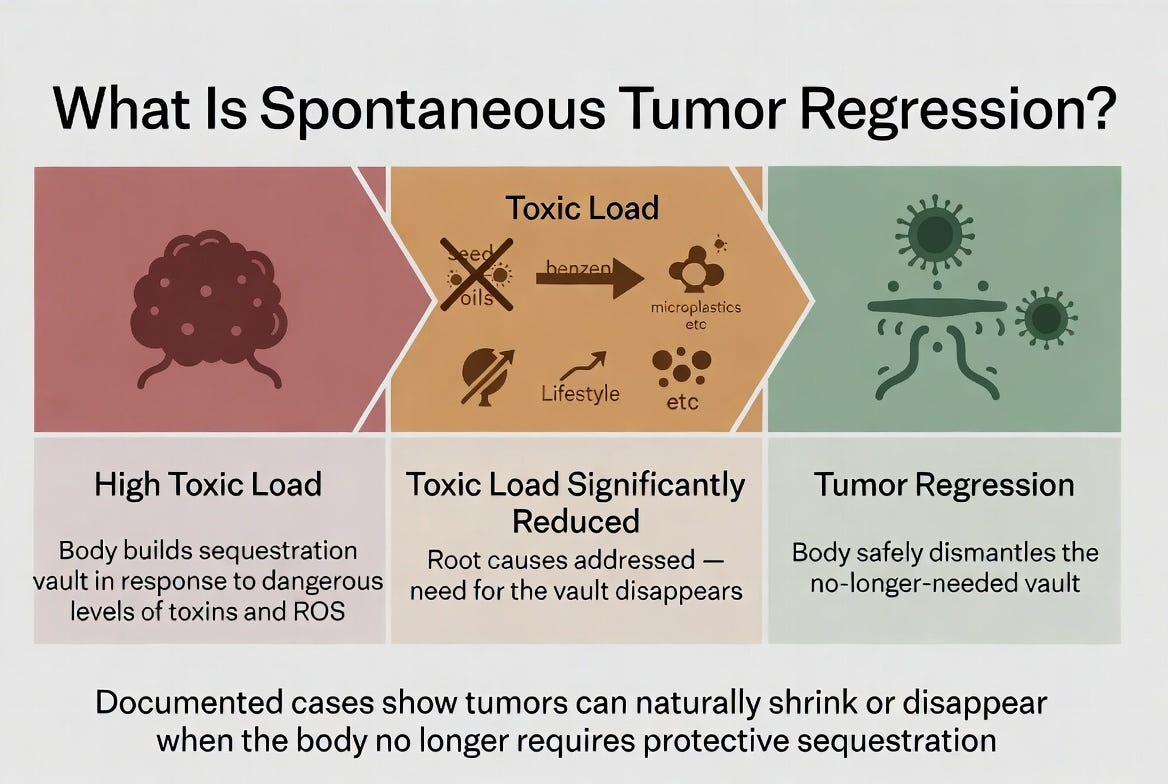
Toxin Sequestration Theory (TST) offers a clear and hopeful answer. Tumors are not autonomous invaders or broken cells run amok. They are protective sequestration vaults the body constructs in response to dangerous levels of toxic and oxidative stress. When the underlying toxic load — whether from seed oils, glucose, fructose, iron, ammonia, oxalates, ethanol, or microplastics — becomes too great for the liver and other primary detox systems to handle, the body builds these specialized storage units to isolate and process the threat.
And when that toxic burden is significantly reduced, the need for the vaults disappears.
In this post, we’ll explore how spontaneous tumor regression is not a random miracle, but a logical and expected outcome under TST. When the body no longer requires emergency toxin storage, it can safely begin the process of decommissioning and dismantling the very structures it once worked so hard to build.
This understanding doesn’t just explain why some tumors regress — it reframes the entire purpose of cancer itself.
What Is Spontaneous Tumor Regression?
Spontaneous tumor regression (STR) refers to the partial or complete disappearance of a malignant tumor without any conventional medical treatment — no surgery, chemotherapy, radiation, or targeted therapy.
While extremely rare in absolute terms, spontaneous regression is a well-documented medical phenomenon. It has been observed across many cancer types, including neuroblastoma (especially in infants), renal cell carcinoma, melanoma, lymphoma, and even some cases of advanced metastasis.
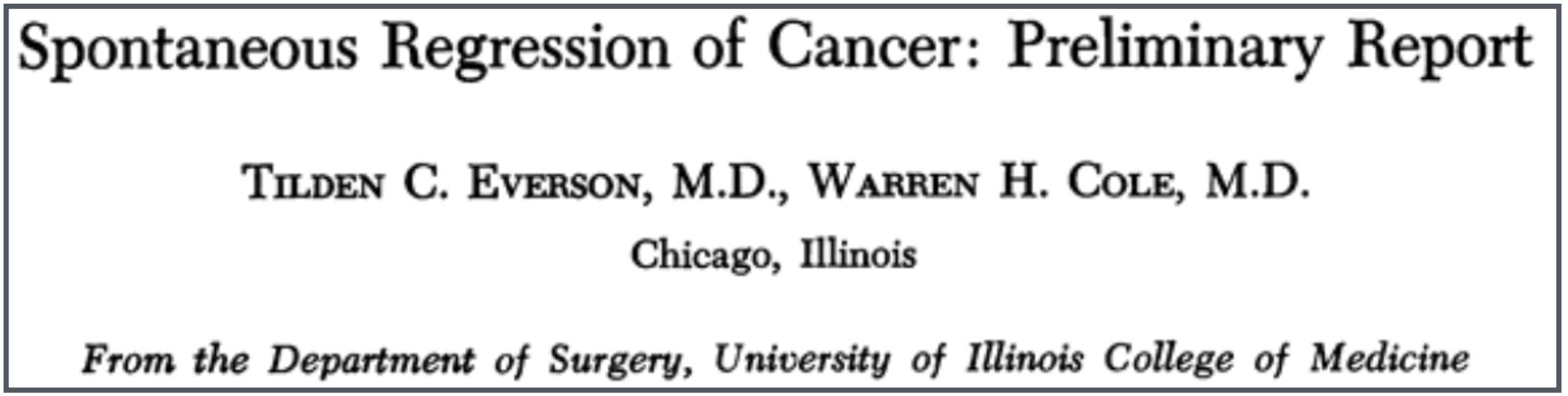
Medical literature contains hundreds of verified cases dating back to the 19th century. In 1956, researchers Everson and Cole published a landmark review documenting 176 cases of spontaneous regression.
Since then, additional cases have been reported in major medical journals, though the true incidence is likely underreported because most cancer patients receive treatment, making it difficult to observe untreated natural outcomes.
Common patterns seen in documented regressions include:
Dramatic lifestyle or dietary changes
Occurrence during or after pregnancy
Sudden onset after a high fever or severe infection
Removal from a highly toxic environment
Occasionally, with no obvious trigger at all
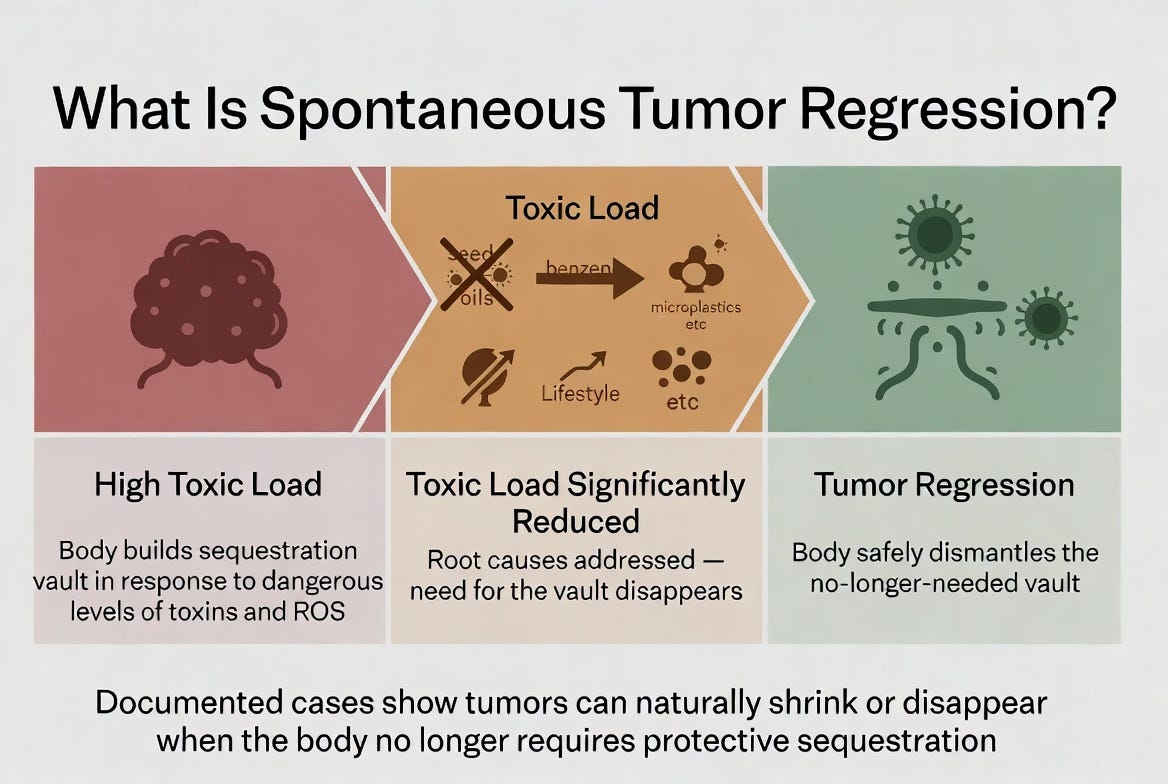
Mainstream medicine typically describes these events as rare “miracles” of the immune system or statistical anomalies. However, they remain poorly understood and are often dismissed as curiosities rather than important biological signals. In what follows, we’ll examine what TST suggests is really happening during spontaneous regression — and why these cases may be far more instructive than random exceptions.
The Mainstream View
In conventional oncology, spontaneous tumor regression is typically described as a rare and poorly understood event — often attributed to a sudden, vigorous immune response that “attacks” the cancer. Doctors sometimes call it a “miracle” or a statistical anomaly. When pressed for explanation, the usual narrative is that the immune system finally recognized the tumor as foreign and successfully eliminated it.
While immune activity may play a role, this explanation has significant limitations:
It doesn’t explain why regression occurs in some patients but not others with seemingly similar tumors.
It fails to account for the strong association between regression and major reductions in toxic exposure, dramatic dietary changes, resolution of chronic infections, or removal from polluted environments.
It treats the tumor as an autonomous enemy that the immune system suddenly decides to fight, but doesn’t ask deeper questions - like why do cancer cells provide a service to the body by sequestering, storing, and processing toxins? And why does the body return the favor by providing infrastructure and resources to the tumor?
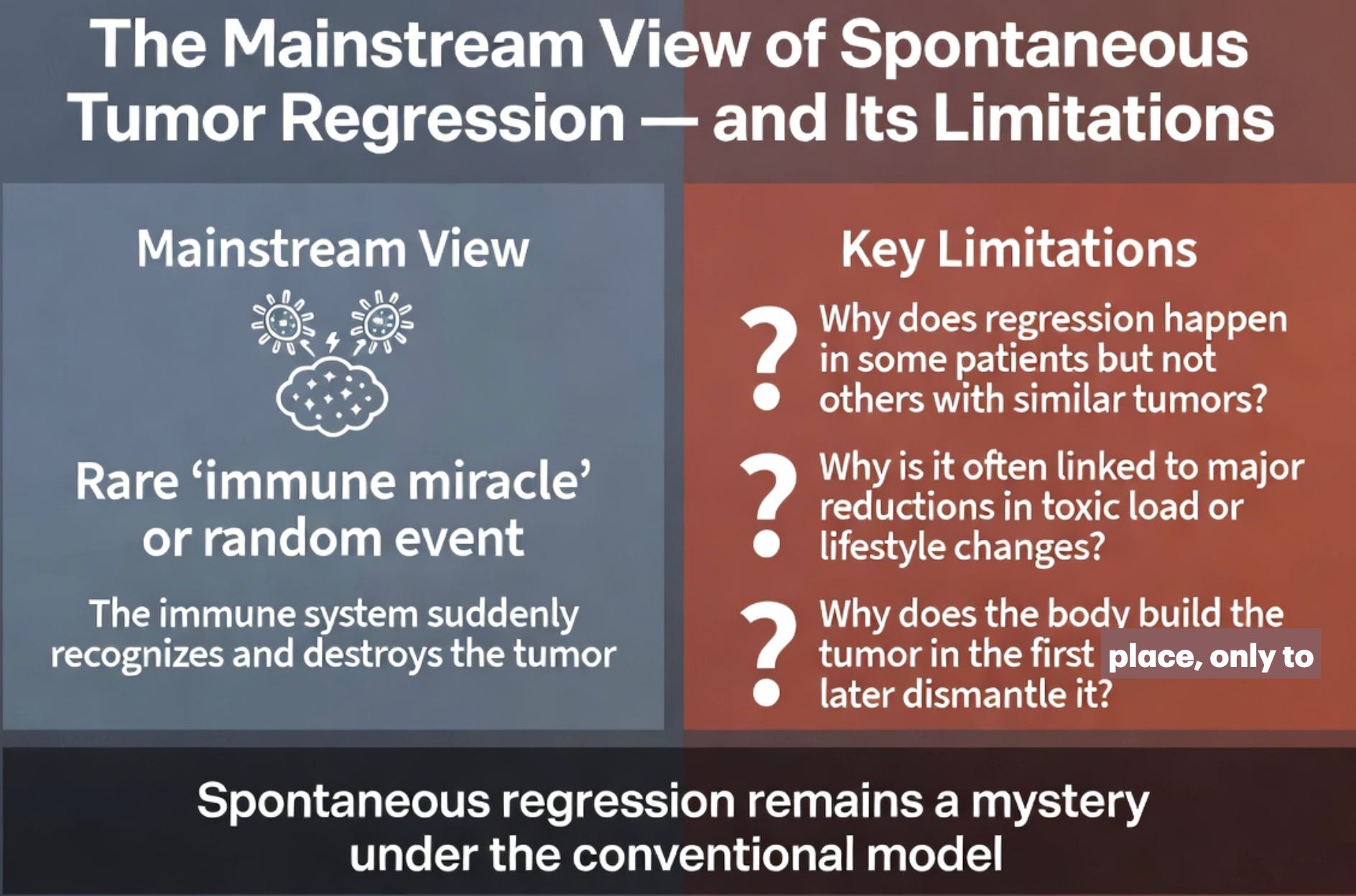
The mainstream view sees cancer as a disease of uncontrolled cell growth driven by genetic mutations. Spontaneous regression, in this framework, remains an unexplained exception rather than a meaningful clue about cancer’s true nature.
Toxin Sequestration Theory takes the opposite approach. Instead of viewing regression as a mysterious immune miracle, TST sees it as the logical and expected outcome when the original problem — excessive toxic and oxidative stress — is meaningfully resolved.
Toxin Sequestration Theory: Regression as Vault Decommissioning
TST offers a much more coherent explanation for spontaneous tumor regression.
Tumors are not autonomous diseases or rogue cells. They are protective sequestration vaults the body constructs when its primary detoxification systems are overwhelmed by toxic and oxidative stress. Once built, these vaults import, process, and safely store dangerous levels of toxins (ammonia, heavy metals, iron, seed oils, fructose, ethanol, mycotoxins, oxalate, microplastics, etc.) that would otherwise cause widespread damage.
When the underlying toxic load is meaningfully reduced, the original need for these vaults disappears. At that point, the body can begin the process of decommissioning them. This is what spontaneous regression actually represents: the safe, orderly dismantling of a no-longer-needed protective structure.
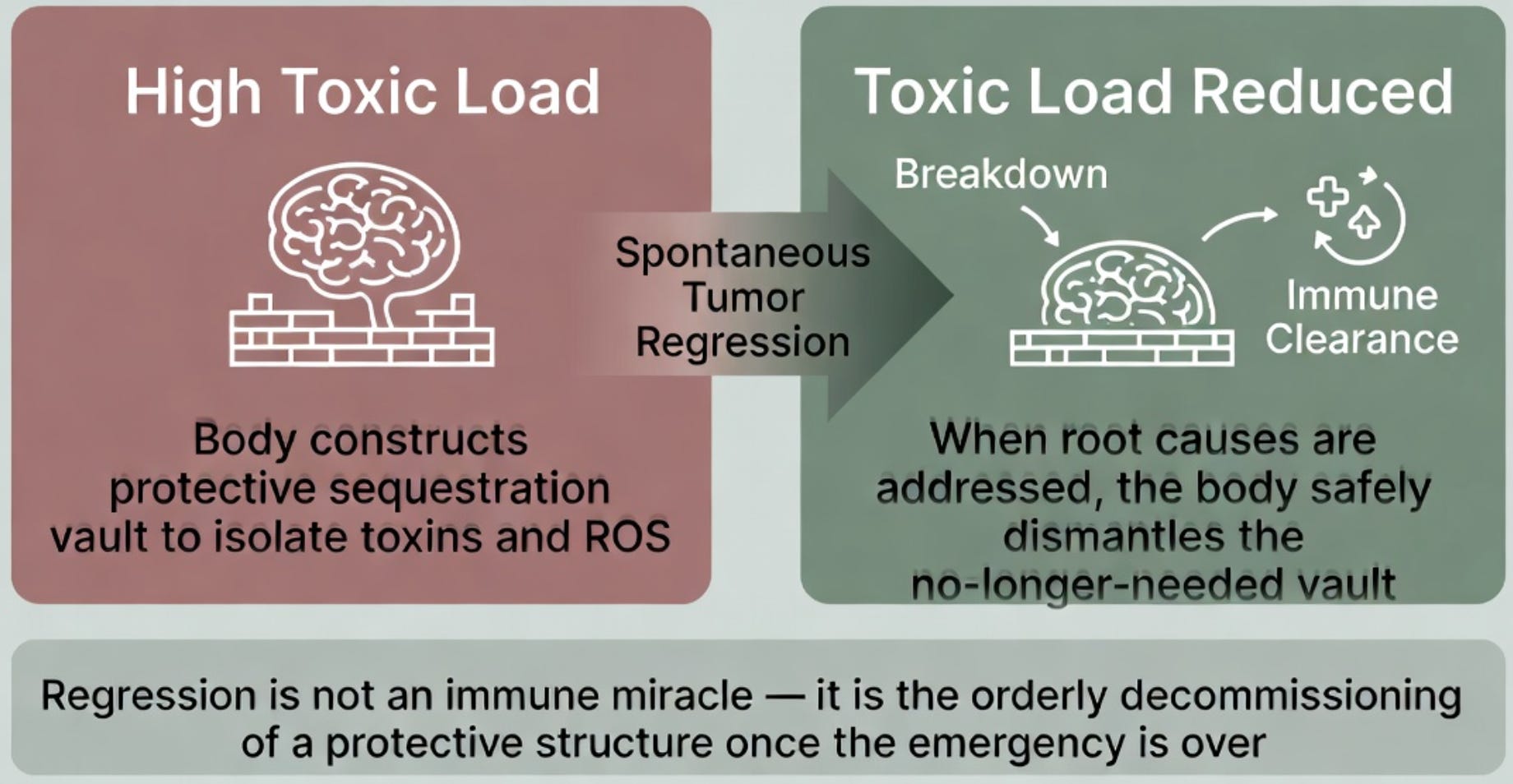
Under TST, regression is not a mysterious immune miracle. It is the expected outcome when the body no longer requires emergency toxin storage. The tumor has served its purpose, and the body can now safely break it down through normal physiological processes — apoptosis of tumor cells, reduced blood supply (anti-angiogenesis), and eventual immune clearance of the remaining tissue.
This explains why regression often occurs after:
Major dietary changes (e.g., removing seed oils, sugar, and processed foods)
Reduction in environmental toxin exposure
Resolution of chronic infections or inflammation
Significant improvements in overall redox balance and detoxification capacity
The tumor doesn’t disappear because the body suddenly “attacks” it. It disappears because the emergency is over.
How Regression Actually Happens Under TST
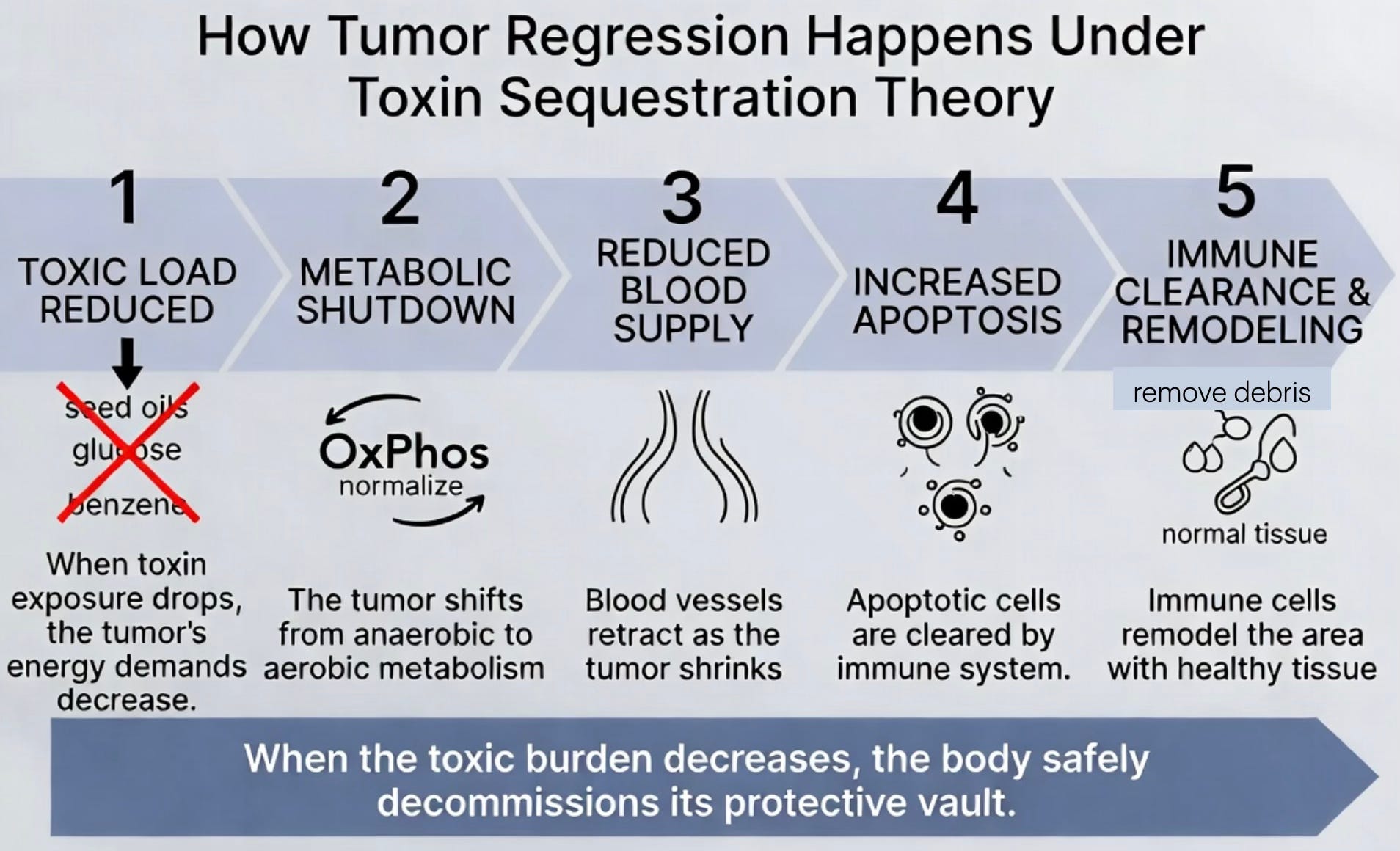
When the toxic and oxidative burden drops below a critical threshold, the body shifts from maintenance mode to decommissioning mode. The tumor, having served its purpose as a sequestration vault, is no longer needed. Here’s how the process unfolds according to TST:
Metabolic Shutdown: With less incoming toxins (glucose, fructose, seed oils, ammonia, etc.), the tumor no longer needs to run its high-intensity detoxification metabolism. The Warburg effect and glutamine processing — which serve primarily as detox pathways rather than energy sources — naturally decline. As the toxic burden eases, protective OxPhos downregulation is reversed because the cell no longer needs to shield itself from massive internal ROS production generated by toxin processing.
Reduced Blood Supply: The body downregulates angiogenesis (new blood vessel formation) to the tumor. With fewer toxins arriving and less need for active detoxification, the sequestration vault becomes unnecessary and begins to shrink.
Increased Apoptosis: The protective signals that kept the sequestration vault intact begin to weaken, allowing programmed cell death (apoptosis) to increase as the body starts dismantling the now-unnecessary structure.
Immune Clearance: Once the toxic burden decreases, the immune system — previously suppressed or preoccupied by high systemic redox stress — can safely engage and clear the remaining cellular debris of the decommissioned vault.
Tissue Remodeling: The body gradually replaces the dismantled tumor tissue with normal or scar tissue, depending on the extent and duration of the original vault.
This is not a sudden “attack” on the tumor. It is a coordinated, orderly wind-down of a temporary protective structure once the emergency has passed. In essence, spontaneous regression is the body saying: “The threat has been reduced. We no longer need this vault.”
Evidence Supporting This View
If spontaneous tumor regression is simply the body decommissioning an unneeded toxin sequestration vault, we should expect to see it occur most often when the underlying toxic load is meaningfully reduced. The medical literature supports this pattern.
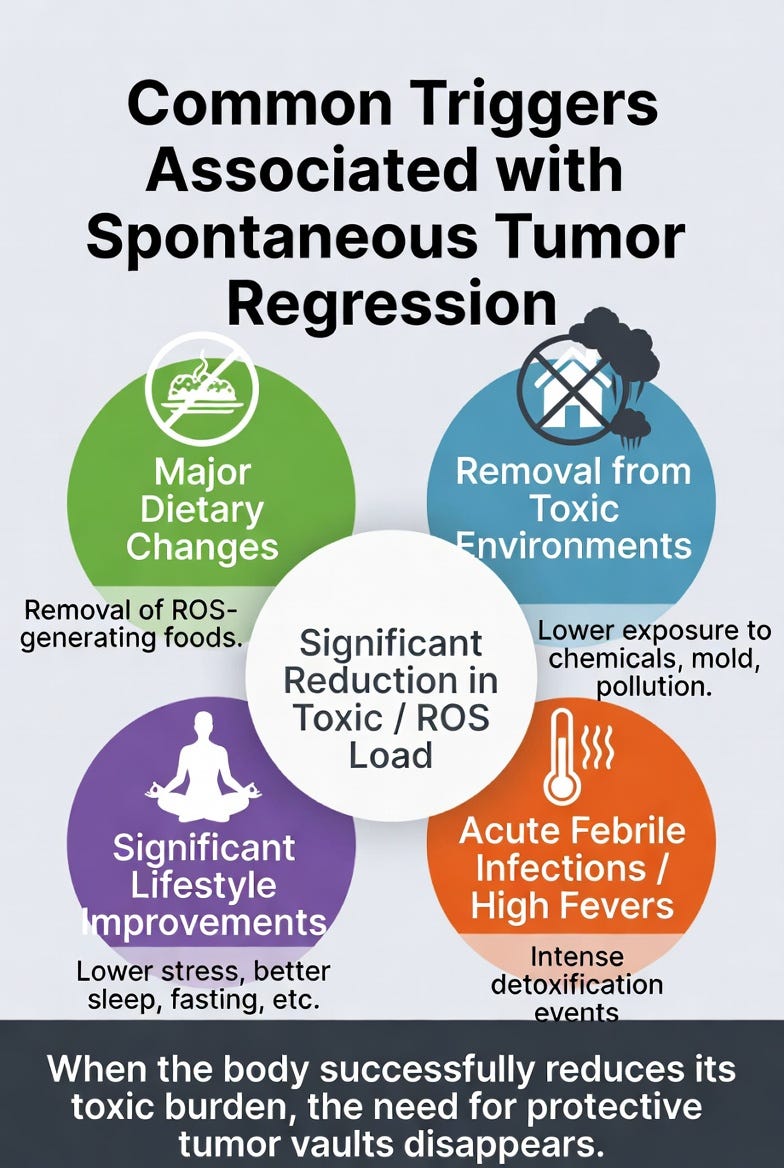
Documented cases of spontaneous regression frequently coincide with:
Major dietary shifts — particularly large reductions in processed foods, seed oils, sugar, and other ROS-generating substances.
Removal from toxic environments — patients moving away from industrial pollution, moldy buildings, or high-chemical workplaces.
Acute febrile infections and high fevers — Severe infections accompanied by high fever are one of the most consistently reported triggers for spontaneous regression. These events may represent periods of intense detoxification, during which the body successfully clears a large accumulated toxic burden (possibly through mechanisms such as increased bile flow and toxin dumping, as proposed by some researchers like Garrett Smith). Once this burden is reduced, the need for the sequestration vault diminishes and the body can safely dismantle it.
Significant lifestyle changes — including fasting, detoxification protocols, or dramatic improvements in sleep and stress levels that lower overall oxidative stress.
Certain cancers show notably higher rates of spontaneous regression, including:
Neuroblastoma in infants (often regresses without treatment)
Renal cell carcinoma
Melanoma
Some lymphomas
These are cancers where the toxic burden may be more “reversible” once the driving factors are removed. In contrast, cancers driven by heavy, ongoing toxin exposure (such as smoking-related lung cancer or advanced metastasis with high systemic load) regress much less frequently.
This pattern is difficult to explain under the conventional “cancer as genetic disease” model, but fits naturally with Toxin Sequestration Theory: when the body no longer needs the emergency vault, it safely takes it down.
The ROS Budget: The Key Driver of Both Tumor Formation and Regression
At the heart of Toxin Sequestration Theory lies a simple but powerful concept: every tissue has a local ROS budget — a threshold of oxidative stress it can safely handle.
When incoming toxins and ROS production exceed this budget, the body builds a tumor as an emergency sequestration vault to isolate and process the overload.
When the toxic burden is reduced and ROS levels fall back below this budget, the emergency is over. The tumor is no longer needed, and the body can safely decommission it.
Spontaneous regression, therefore, is not random. It occurs when the body successfully brings local and systemic ROS production back under control. This explains why regression is often observed after major reductions in toxin exposure, dietary changes that lower oxidative stress, resolution of chronic inflammation, or intense detoxification events (such as high fevers).
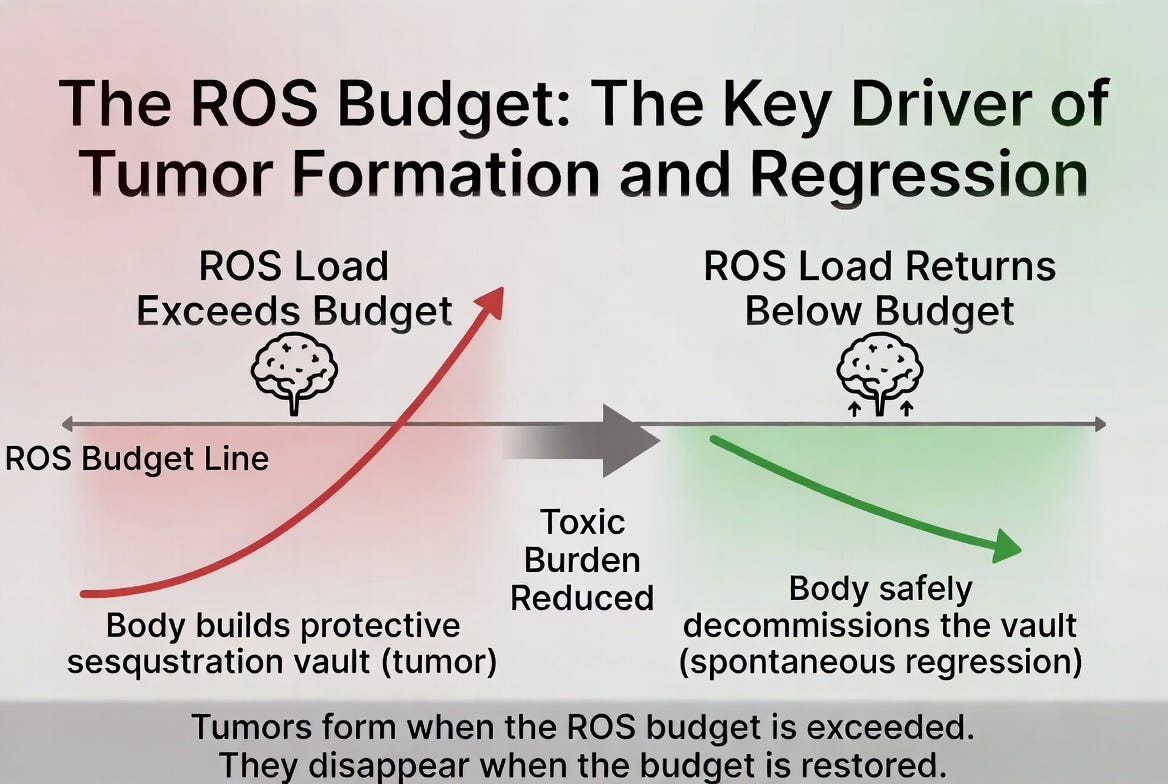
In this framework, tumors are dynamic responses to ROS imbalance. They grow when the budget is exceeded and shrink or disappear when the budget is restored. The tumor is not the disease — it is the body’s attempt to survive an unsustainable level of oxidative stress.
This ROS budget model unifies tumor formation, progression, metastasis, and regression under one coherent mechanism.
Implications: How to Encourage Tumor Regression
If spontaneous regression is the body safely decommissioning an unneeded toxin sequestration vault, then the most rational strategy is not to attack the tumor directly, but to reduce the toxic and oxidative burden that made the vault necessary in the first place.
This leads to several practical implications:
Focus on lowering the root toxic load. Prioritize removing or minimizing major drivers such as industrial seed oils, refined sugars and fructose, excess iron, microplastics, mycotoxins, and other ROS-generating substances. Dramatic dietary changes (e.g., moving toward carnivore or animal-based diets low in plant toxins) have been anecdotally linked to regression in some cases.
Support the body’s natural detoxification systems. Improving liver function, bile flow, lymphatic drainage, and gut health may help the body clear stored toxins more effectively, reducing the need for emergency vaults.
Create conditions for safe decommissioning. Strategies that lower systemic inflammation and oxidative stress (quality sleep, stress reduction, appropriate exercise, and avoidance of additional toxins) may increase the likelihood that the body can safely dismantle tumors.
Be cautious with aggressive tumor-killing approaches. Therapies that rapidly destroy tumor tissue without addressing the underlying toxic burden may release stored toxins back into circulation, potentially making the situation worse in some cases.
TST does not guarantee spontaneous regression. However, it suggests that the best chance for natural tumor resolution comes from addressing the reason the tumor was built — excessive toxic and redox stress — rather than solely focusing on destroying the tumor itself.
Conclusion
Under TST, spontaneous tumor regression is neither a random miracle nor a mysterious immune fluke. It is the logical and orderly decommissioning of a temporary protective vault once the emergency has passed. When the body successfully reduces its toxic burden — whether through dietary change, environmental detoxification, fever-induced clearance, or other means — the need for these vaults disappears, and the body can safely take them down.
The hopeful message is clear: many tumors are reversible. The body built them for a reason — and when that reason is removed, it often has the capacity to dismantle them as well. True healing lies not in waging endless war against the tumor, but in lightening the toxic load so the body no longer needs its emergency storage vaults.
Interesting proposition. If there’s one thing that’s central to all this is that detoxifying the body is paramount for any cancer patient and also as prevention against cancer and other chronic diseases.