
Gallstone Vaults: How the Body Uses Cholesterol Stones to Sequester Toxic Bile
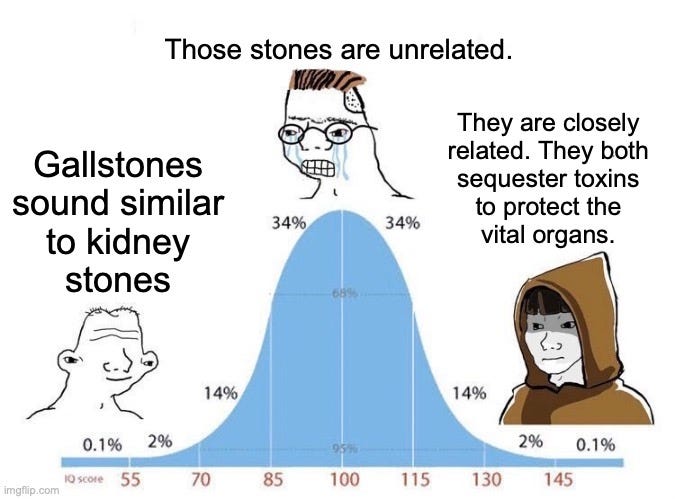
Just as the body uses kidney stones to store oxalates, it uses gallstones to store toxic bile, protecting the vital organs from lipophilic toxins.

What if the gallstones that doctors so often want to remove are not the disease, but the body’s attempt to contain it?
For decades, mainstream medicine has treated gallstones as little more than a plumbing problem caused by “too much cholesterol” or “bad diet.” The solution is usually the same: remove the gallbladder or try to dissolve the stones. But this view completely misses what the body is actually trying to do.

In an age of seed oils, microplastics, heavy metals, excess retinoids, and a constant barrage of lipophilic toxins, the liver is under siege. When it can no longer safely excrete these substances through normal bile flow, it doesn’t simply give up. Instead, it does something remarkably intelligent: it uses cholesterol as a structural scaffold to build protective vaults — solid gallstones.
These stones are not random deposits. They are purposeful containment structures designed to trap and immobilize lipophilic toxins that would otherwise recirculate and cause widespread damage.
The body is, in effect, turning a mobile threat into a stable, inert one — just as it uses calcium to neutralize soluble oxalate in the kidneys. My previous post established kidney stones as the body’s way of preventing systemic oxalate toxicity.
Now, this post will argue the body uses cholesterol-based gallstones to contain the dangers of toxic bile. This demonstrates the deep analogy between kidney stones and gallstones.
More broadly, these stones are “mini-vaults” in my Toxin Sequestration Theory (TST). They are very much analogous to skin growths in TST. Both skin growths and stones are Tier 2 strategies, meaning that they are later-stage relative to building fat tissue (Tier 1) but earlier-stage relative to building cancer tissue (Tier 3).
It feels exciting to me that one theory, TST, can explain so many seemingly unrelated phenomena in the body: from obesity to cancer to moles to gallstones.
Now, let’s dive deeper into how gallstones fit into TST.
Then vs. Now: The Modern Explosion of Gallstones
For most of human history, gallstones were uncommon. Our ancestors, eating diets based on meat and animal fats, placed a relatively light burden on the liver and biliary system. Toxic bile and cholesterol precipitation into stones were rare occurrences.
That changed dramatically in the last 100–150 years. The widespread consumption of seed oils, foods fortified with non-heme iron, excess copper, excess vitamin A, microplastics, and PFAS has placed an unprecedented load on the liver. As a result, the production of thick, toxin-laden bile has become common. The body, in its wisdom, responds by forming gallstones at much higher rates than ever before.
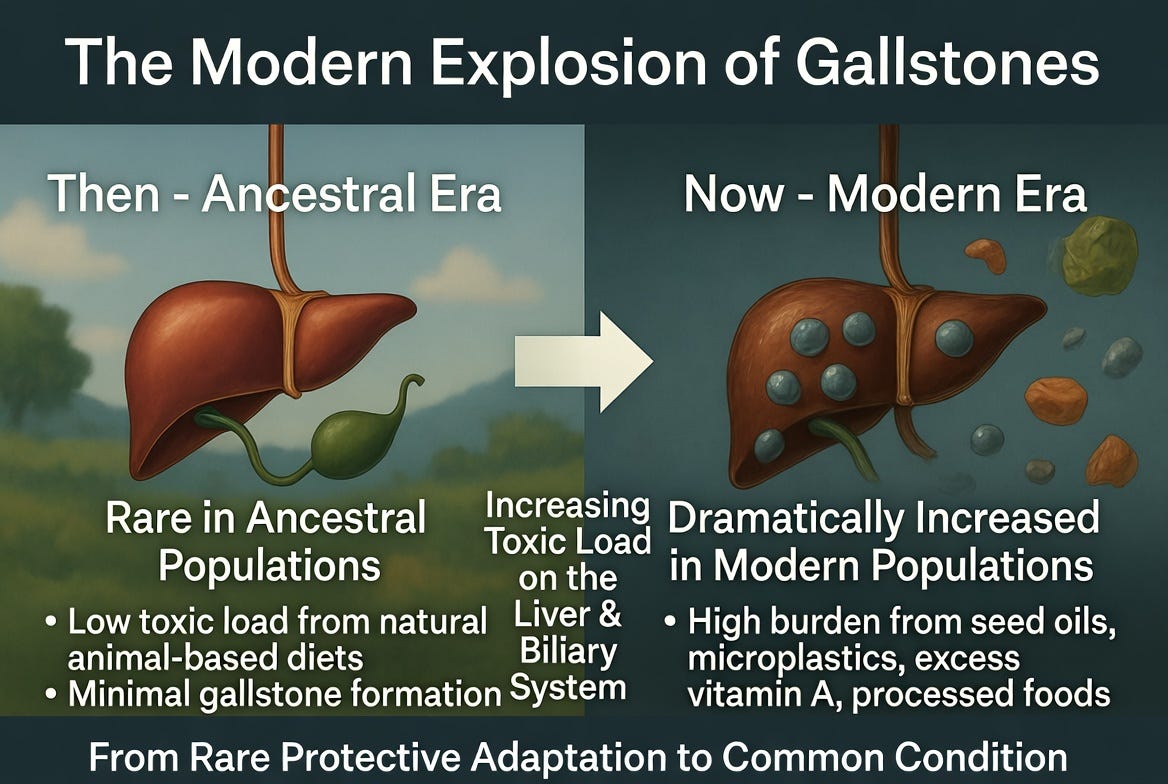
Today, gallstones affect tens of millions of people in developed countries. This is not about “eating too much fat.” It is about toxic overload overwhelming the liver’s capacity to safely excrete waste through bile. When the biliary system becomes saturated, the body does what it always does: it escalates its protective strategies.
Toxic Bile Theory: The Liver’s Overloaded State
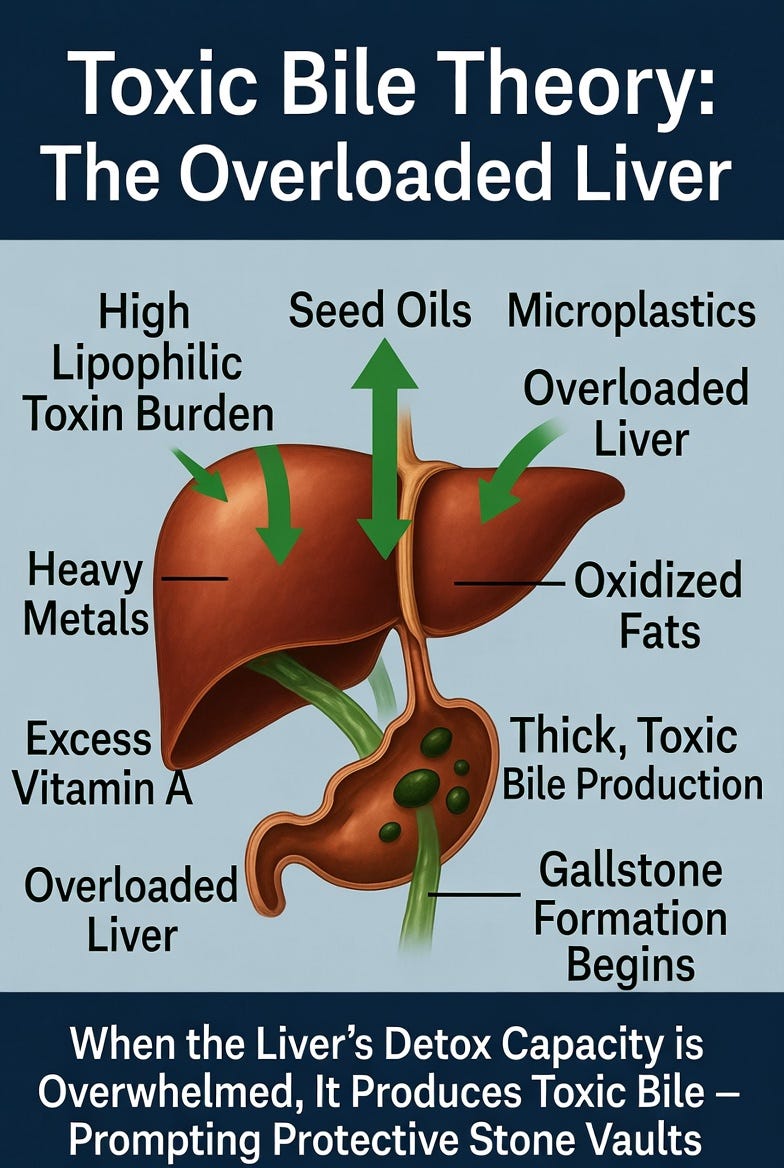
One of the most insightful frameworks for understanding gallstones comes from Garrett Smith’s Toxic Bile Theory. According to this view, many modern chronic conditions stem from the liver producing thick, concentrated, and increasingly toxic bile when it is overburdened.
The liver’s job is to process and excrete a wide range of fat-soluble toxins. In today’s world — with high intake of seed oils, oxidized polyunsaturated fats, microplastics, excess vitamin A (retinoids), heavy metals, and environmental chemicals — the liver can become overwhelmed. The resulting bile becomes viscous, irritating, and laden with waste products. Instead of flowing smoothly, this toxic bile can damage the gallbladder lining and set the stage for stone formation.
Toxic Bile Theory explains why the biliary system becomes stressed. Toxin Sequestration Theory (TST) builds on this by explaining what the body does about it: it forms protective gallstones as a containment strategy. Together, these ideas create a coherent picture — the liver is doing its best to manage a toxic load our ancestors never faced, and gallstones are one of its intelligent responses.
Gallstones as Protective Mini-Vaults
In Toxin Sequestration Theory (TST), gallstones are best understood as localized mini-vaults created by the liver and gallbladder.
When the liver is overloaded with lipophilic toxins (seed oils, microplastics, excess retinoids, heavy metals, etc.), it produces thick, concentrated, and increasingly toxic bile. Rather than allowing this harmful bile to recirculate and damage the intestines or systemic circulation, the body uses cholesterol as a structural matrix to precipitate these toxins into solid stones.
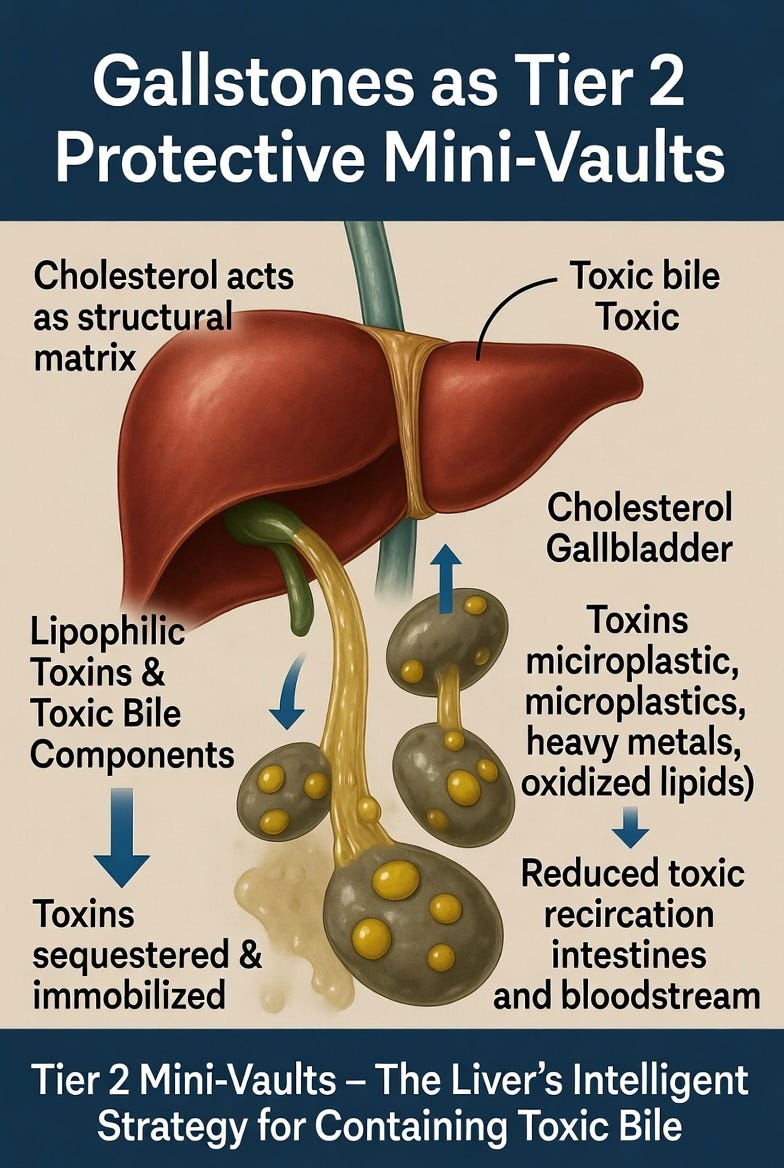
Cholesterol itself is not the villain here. It serves primarily as a stable building material — similar to how the body coats asbestos fibers with iron and protein to form asbestos bodies. The resulting gallstone becomes a solid, rock-like vault that immobilizes and sequesters the real problematic substances inside the biliary system.
This strategy prevents toxic bile components from being reabsorbed through the intestines (enterohepatic recirculation) and protects more vulnerable tissues downstream. Just as the body forms calcium oxalate kidney stones to contain soluble oxalate, it forms cholesterol-based gallstones to contain the dangers of toxic bile.
What Are the Key Toxins Stored in Gallstones?
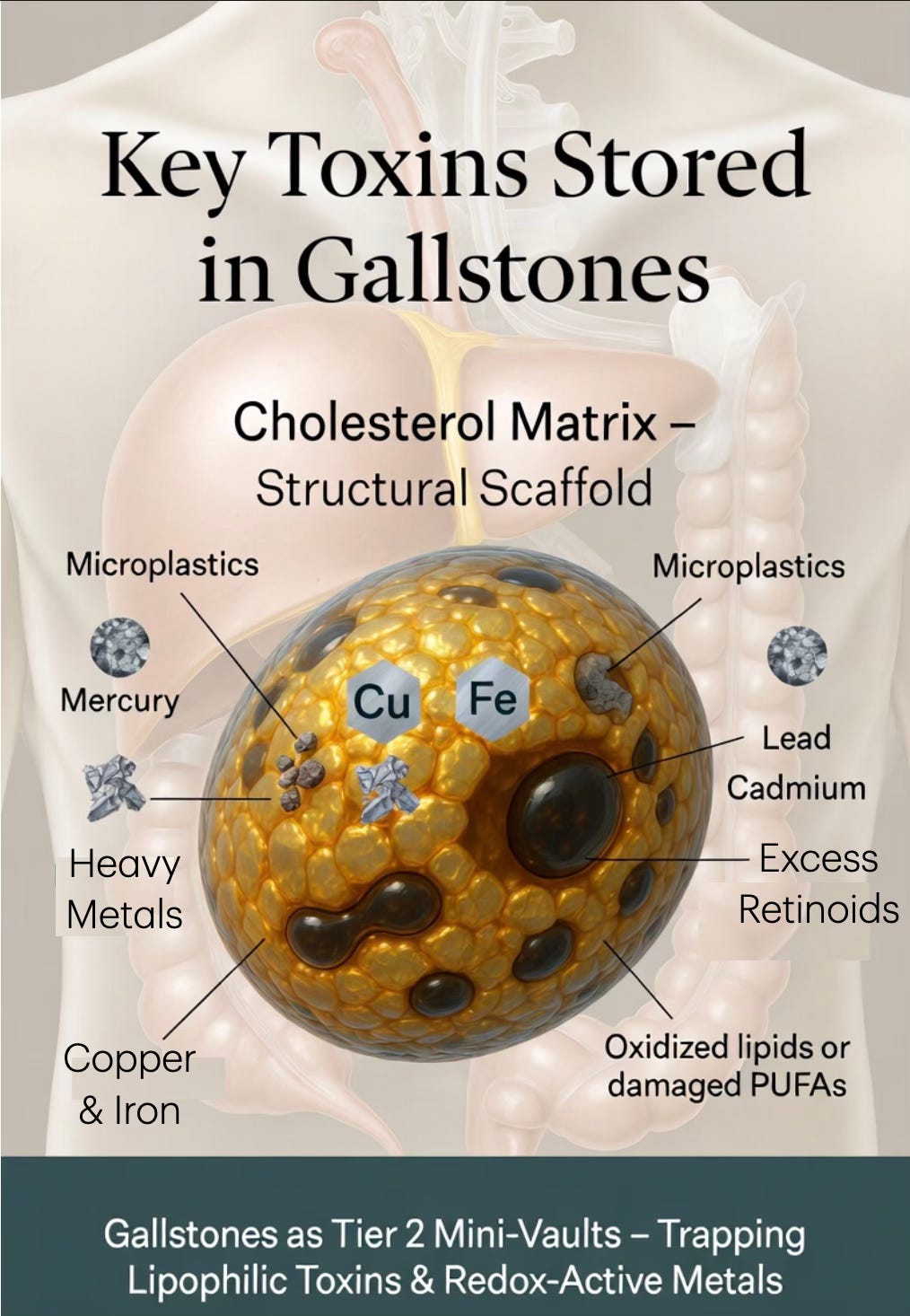
Gallstones are not simply “excess cholesterol.” Cholesterol often serves as the structural matrix — the stable scaffolding — that allows the body to build solid, rock-like vaults. Inside these vaults, the body sequesters more problematic substances.
Key toxins and compounds commonly found in or associated with gallstones include:
Microplastics and nanoplastics: Recent studies have detected significant levels of microplastics embedded in human gallstones, often acting as a nidus (seed) around which stones form. For example, Zhang et al. (2024) directly detected microplastics embedded in human gallstones.
Heavy metals: Elevated levels of mercury, lead, cadmium, and other metals have been measured in gallstones. For example, Mondal et al. (2017) used spectroscopy to analyze the contents of gallstones, and they found dense deposits of heavy metals in these stones, including high levels of mercury, lead, cobalt, and cadmium.
Copper and Iron: The liver concentrates and excretes both metals via bile. As a result, excess copper and iron are frequently incorporated into gallstones, particularly in pigmented stones. This aligns with the body using the stones to sequester redox-active metals that could otherwise generate oxidative stress.
Oxidized lipids and damaged PUFAs: Byproducts of seed oil consumption that the liver is trying to excrete through bile.
Excess retinoids (Vitamin A derivatives): Highly lipophilic compounds that can accumulate and contribute to toxic bile.
Other lipophilic environmental toxins: Including certain PFAS and persistent organic pollutants.
In TST terms, gallstones function as Tier 2 mini-vaults that immobilize these difficult-to-clear toxins, preventing them from recirculating through the intestines and causing broader systemic damage.
The Role of Cholesterol in Gallstone Formation
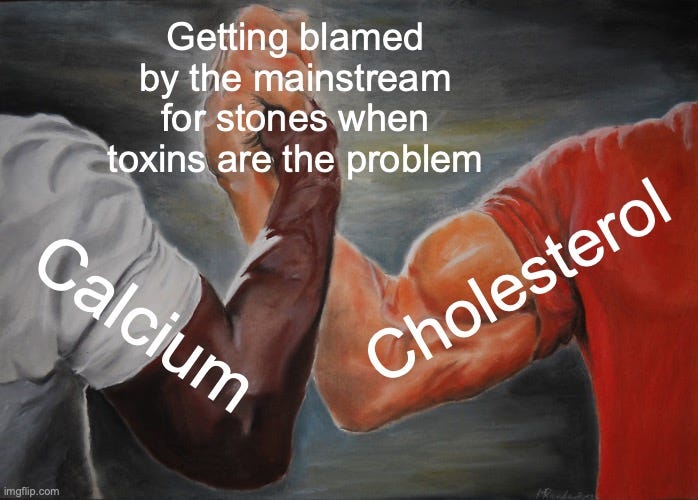
Mainstream medicine has a consistent pattern of misidentifying the culprit when it comes to stones. Just as they often blame calcium for kidney stones (when calcium is actually the body’s intelligent binder that turns dangerous soluble oxalate into inert crystals), they frequently blame cholesterol for gallstones.
Cholesterol is not a toxin. It is an essential molecule the body needs for cell membranes, hormone production, and bile formation. In gallstone formation, cholesterol primarily serves as a structural scaffold — similar to the role calcium plays in oxalate stones.
When the liver and gallbladder are overloaded with lipophilic toxins and toxic bile, the body uses excess cholesterol to precipitate into a solid, stable crystalline form. This creates the rock-like gallstone that can then safely trap and immobilize more dangerous substances (microplastics, oxidized seed oils, heavy metals, excess retinoids, etc.).
In both cases — kidney stones and gallstones — the body is using an abundant, useful molecule (calcium or cholesterol) as a building material to construct durable protective vaults. The mainstream tendency to blame these molecules misses the deeper truth: they are tools in the body’s sequestration strategy, not the root cause of the problem.
How This Strategy Protects the Body
By forming gallstones, the liver and gallbladder are executing a clever defensive maneuver. These solid stones act as stable storage sites that prevent toxic bile components from being reabsorbed in the intestines through enterohepatic recirculation. This reduces the overall toxic burden returning to the liver and circulating throughout the body.
In TST terms, gallstones serve as Tier 2 mini-vaults that protect more critical and sensitive tissues. By locking lipophilic toxins, oxidized lipids, microplastics, and other harmful substances into an inert, rock-like form inside the gallbladder, the body shields the intestines, bloodstream, and eventually vital organs from prolonged exposure to concentrated toxins.
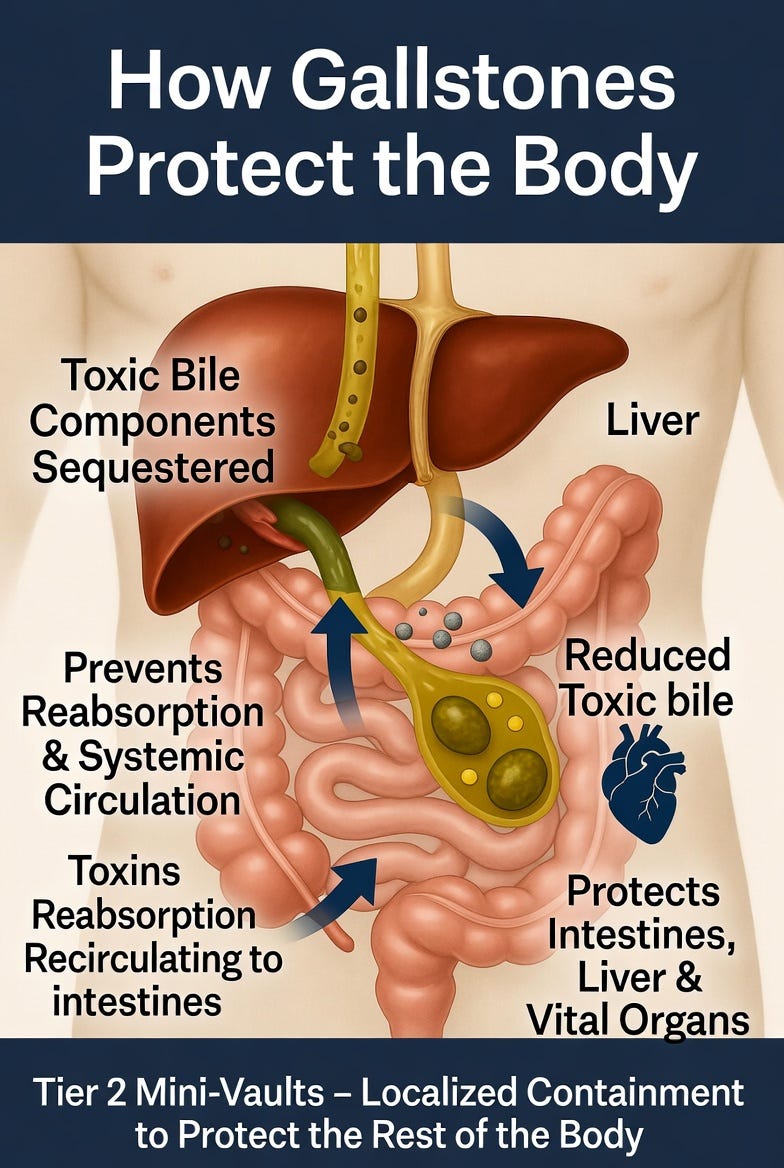
A painful gallstone attack, while uncomfortable, is often preferable to allowing toxic bile to continuously irritate the gut lining or contribute to systemic inflammation and oxidative stress. Just as kidney stones contain soluble oxalate to protect the rest of the body, gallstones contain toxic bile components to limit their damage.
The Body’s Hierarchical Strategy for Toxic Bile
Just as with oxalate, the body manages toxic bile through a clear, escalating hierarchy of protection:
Tier 1 – Primary Clearance
The liver attempts to produce and excrete bile normally, binding and eliminating lipophilic toxins through regular bile flow into the intestines. Healthy bile flow, supported by adequate animal fats, choline, and taurine, helps prevent overload.
Tier 2 – Gallstone Mini-Vaults
When Tier 1 is overwhelmed, the body precipitates excess cholesterol and toxins into solid gallstones. These act as stable, rock-like vaults that immobilize toxic bile components and lipophilic waste (microplastics, oxidized lipids, heavy metals, copper, iron, excess retinoids), preventing them from recirculating and causing broader damage.
Tier 3 – Tumor Vaults
If the toxic burden remains high and gallstone formation is no longer sufficient, the body may escalate to large-scale lipid-droplet-rich tumor vaults in the liver, gallbladder, or bile ducts. This represents the final, most advanced line of defense.
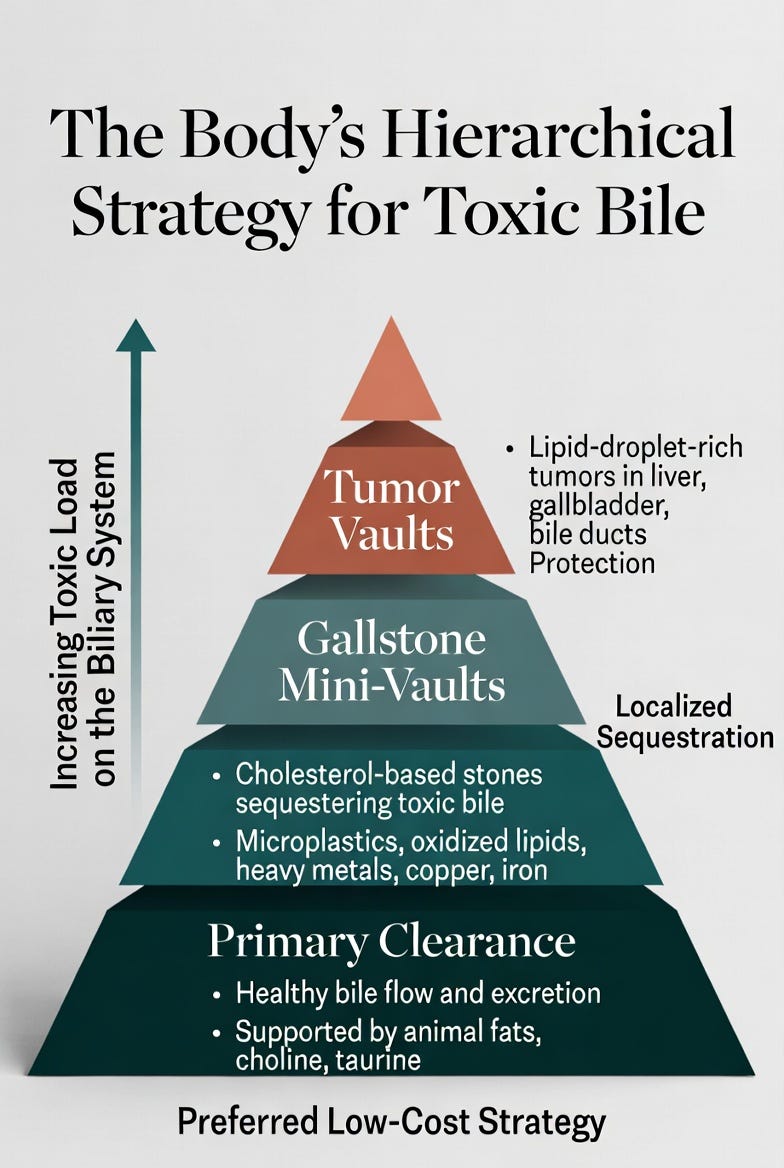
This tiered approach demonstrates the body’s intelligence: it starts with the least expensive strategies and only escalates when necessary. Gallstones, therefore, are not random pathology — they are a sophisticated protective mechanism in the liver’s defensive playbook.
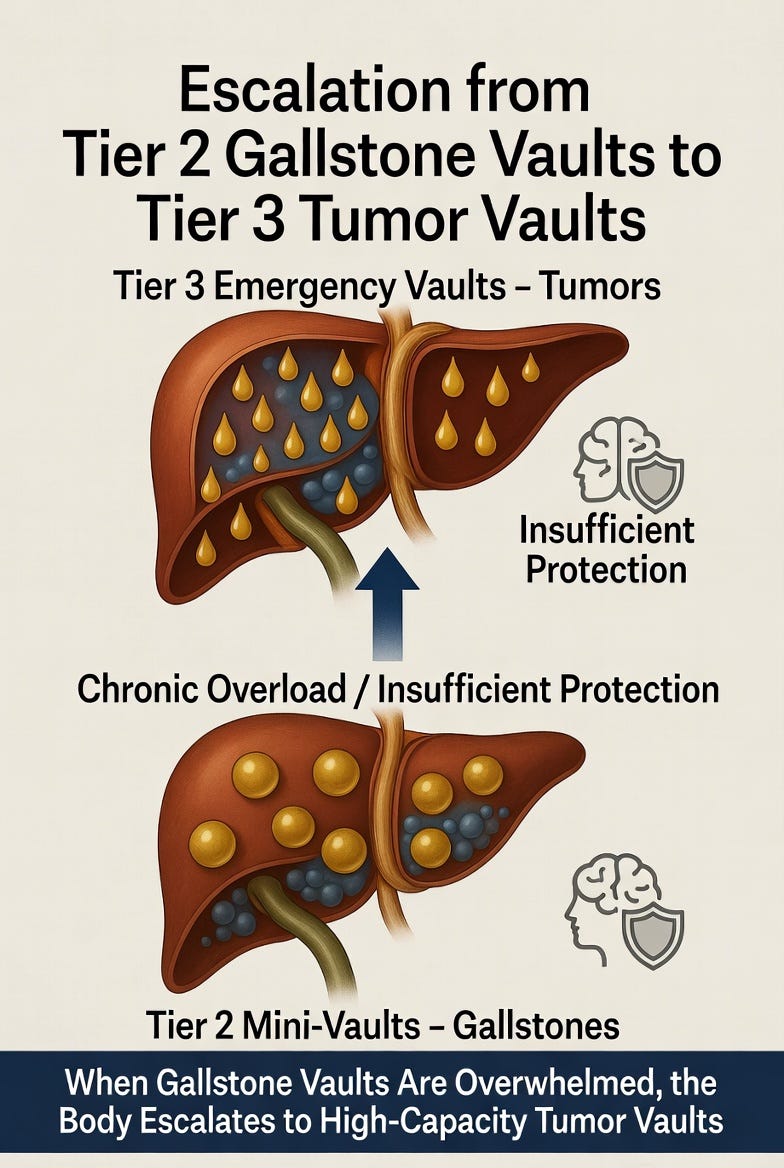
When Tier 2 Is Not Enough: Escalation to Tier 3 Tumor Vaults
Gallstones represent an effective Tier 2 strategy, but they have limits. When the toxic burden on the biliary system becomes chronic and overwhelming — due to persistently high levels of seed oils, microplastics, excess vitamin A, heavy metals, or other lipophilic toxins — the gallstone vaults may eventually become insufficient.
In these cases, the body escalates to its most advanced protective mechanism: Tier 3 tumor vaults. This helps explain the well-established medical associations between long-term gallstone disease and increased risk of certain cancers, particularly:
Gallbladder cancer
Liver cancer (hepatocellular carcinoma)
Bile duct cancer (cholangiocarcinoma)
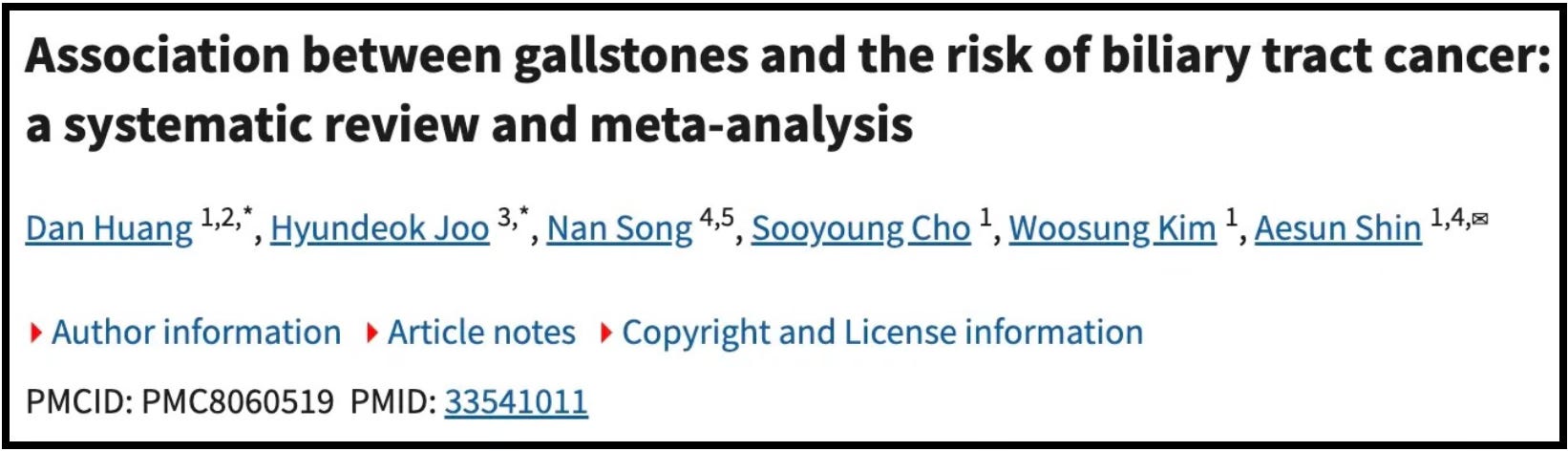
From the TST perspective, these tumors are not random mutations. They are the body’s last-resort, high-capacity vaults. The lipid-rich microenvironment inside these tumors provides an ideal setting for sequestering large amounts of toxic bile components and lipophilic toxins that simpler gallstone vaults could no longer contain. Just as the body may escalate from kidney stones to kidney tumors in severe oxalate overload, chronic biliary stress can drive the formation of tumor vaults in the liver and biliary tract to protect the rest of the body.
The Danger of Attacking the Vaults
If gallstones and biliary tumors are protective strategies, then aggressively attacking them without addressing the underlying toxic load carries real risks.
Mainstream medicine often treats gallstones as isolated problems to be removed. This frequently leads to cholecystectomy (surgical removal of the gallbladder) or procedures aimed at dissolving or breaking up stones. While these interventions can provide short-term relief from pain and obstruction, they can also disrupt the body’s containment system.
When the gallbladder is removed, the liver continues to produce bile, but it drips continuously into the intestines instead of being stored and concentrated. If the toxic burden on the liver remains high, this can lead to increased recirculation of toxins, chronic gut irritation, and greater systemic exposure. In TST terms, removing the Tier 2 vault without lowering the incoming toxin load may force the body to escalate to new, more costly protective mechanisms elsewhere.
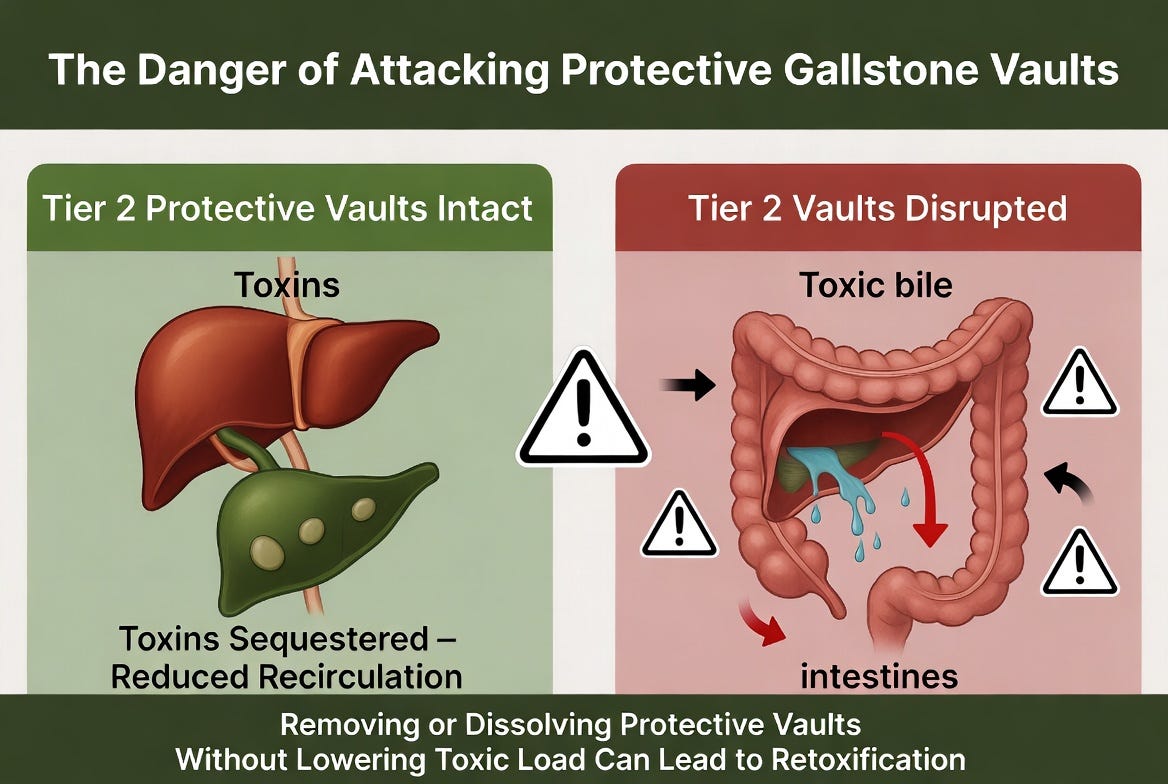
The same caution applies to efforts that aggressively dissolve gallstones. Just as dissolving calcium oxalate kidney stones can release soluble oxalate back into circulation, breaking down gallstone vaults may mobilize stored lipophilic toxins and toxic bile components.
Practical TST-Aligned Approach to Gallstones
If gallstones are protective vaults, the most intelligent strategy is not to fight them, but to reduce the toxic load that forced the body to build them in the first place.
Key recommendations from a TST perspective:
Dramatically lower lipophilic toxin exposure: Minimize seed oils, damaged PUFAs, excess retinoids, excess copper, non-heme iron, heavy metals, and microplastics. These are among the biggest contributors to toxic bile.
Support healthy bile flow and liver function: Animal fats (especially from ruminant animals), choline, and taurine help produce thinner, healthier bile and support proper fat digestion and toxin excretion.
Be cautious with gallbladder removal: Removing the gallbladder without addressing the root toxic burden may lead to ongoing issues with toxic bile dripping directly into the intestines.
By lowering the incoming toxic load and supporting natural bile production and flow, the body often no longer needs to form new gallstones — and in some cases can gradually reduce its reliance on existing vaults. The goal is to work with the body’s intelligence rather than against its protective mechanisms.
Conclusion
If you’re like me, you’re tired of cholesterol being demonized. This blog post directly challenged the decades-old narrative that “cholesterol = bad = gallstones.” Instead, we positioned cholesterol as a neutral, useful building material the body uses to construct protective vaults. Cholesterol doesn’t care about media coverage, it just quietly does its job, helping the body to sequester toxins.
One of the most compelling ideas in this post was reframing gallstones not as random misfortunes or dietary errors, but as deliberate, protective mini-vaults. The body isn’t clumsily failing when it forms these stones — it is intelligently using cholesterol as a stable structural scaffold to trap and immobilize toxic bile components and other lipophilic toxins that would otherwise recirculate and cause widespread damage.
This perspective transforms gallstones from a problem to be cut out into a sophisticated containment strategy, directly parallel to how the body forms calcium oxalate kidney stones. It’s a powerful example of the body’s brilliance operating under modern toxic conditions our ancestors rarely encountered.
Another highlight was the natural synthesis between Garrett Smith’s Toxic Bile Theory and my Toxin Sequestration Theory (TST). Toxic Bile Theory explains why the biliary system becomes overloaded — the liver struggling to process the flood of seed oils, microplastics, excess vitamin A, and toxic metals. TST then explains what the body does in response: it builds solid gallstone vaults to contain the resulting toxic bile. Together, these frameworks create a coherent, satisfying story: the liver isn’t malfunctioning, it is doing its best to manage an unprecedented toxic burden by creating protective structures.
Finally, we tied it all back to cancer. I emphasized the correlation between gallstones and biliary tract cancer tumors. This once again showcases the body’s hierarchical approach to managing toxicity.
Our job is simple: lighten the toxic load, so that the body isn’t forced to build these protective vaults in the first place.
Another great post Patrick!!!
They add synthetic Vitamin A to all store bought milk in México. Can you point me towards how I can discover how dangerous this is?